
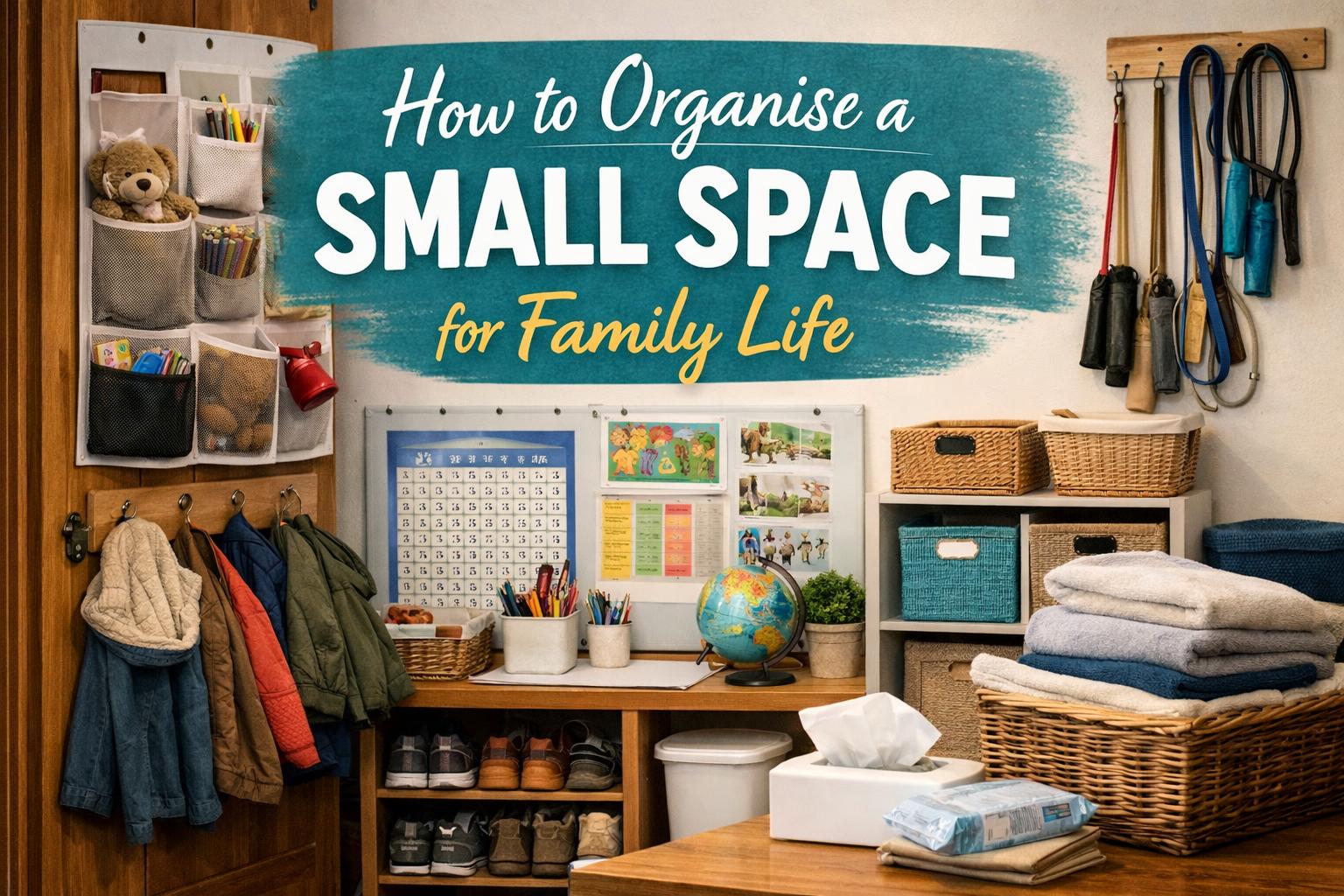
How to Organise a Small Space for Family Life
Learning how to organise a small space can feel totally overwhelming — especially when you’re raising children, living life fully, and don’t want your home to turn into a daily stress zone.
I love organisation. Not magazine-perfect, tiptoe-around chaos — but functional, lived-in, organised chaos. The kind where everyone knows where things are, clean-ups are quick, and the house works with you instead of against you.
We live in a small home with four children, and while my examples come from that experience, these systems work anywhere: apartments, townhouses, downsized homes, or compact family spaces across the UK, Europe, the US, or South Africa…
This isn’t about buying everything at once or chasing perfection. It’s about building calm, one system at a time.
A perfectly tidy house is usually a sign that nobody lives there.
A Quick Reality Check
Let’s get this out the way:
Homes with children are not spotless
Life is allowed to be messy
Organisation is about flow, not control
If your home is easy to reset, easy to clean, and easy to live in — you’re doing it right.
The Golden Rule of Organisation
This rule runs our entire house:
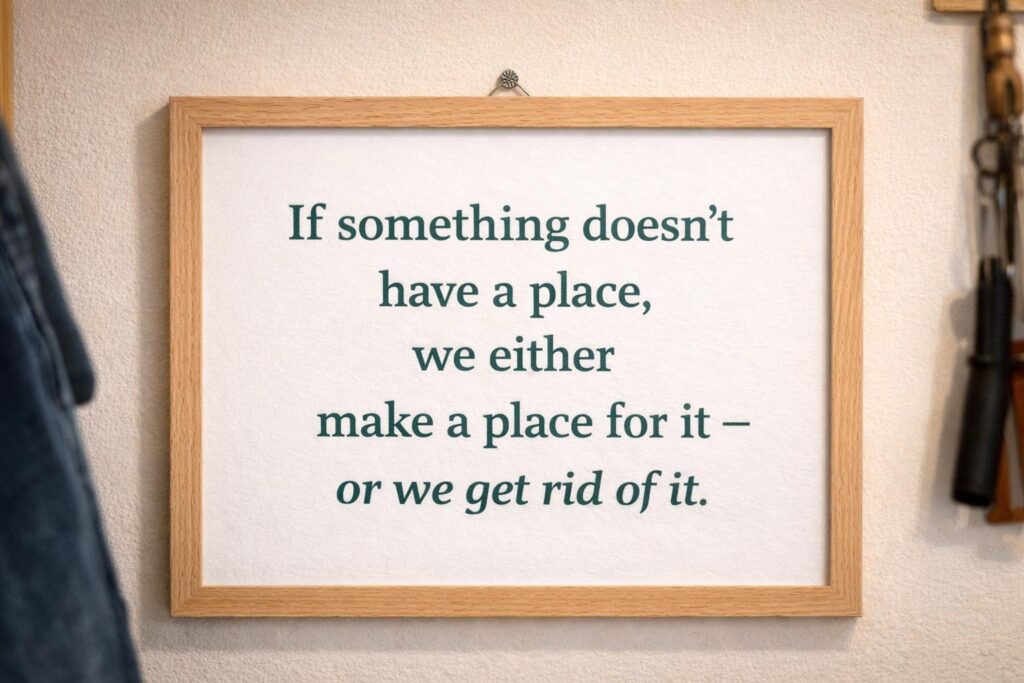
Floating items create stress.
Stress creates shouting.
Shouting helps no one.
Everything earns its place.
This Took Time (and That Matters)
None of this happened in a weekend. These systems were built slowly over nearly two years, by:
Waiting for sales
Receiving second-hand from friends who do not need the item anymore
Using charity shops
Watching Black Friday and clearance deals
Repurposing what we already had
Organisation never comes before food or essentials! I buy cheap and solid — not flimsy rubbish that needs replacing.
Slow, intentional organising always lasts longer.
If your home resets easily, you’re winning – even if it looks like chaos five minutes before dinner.
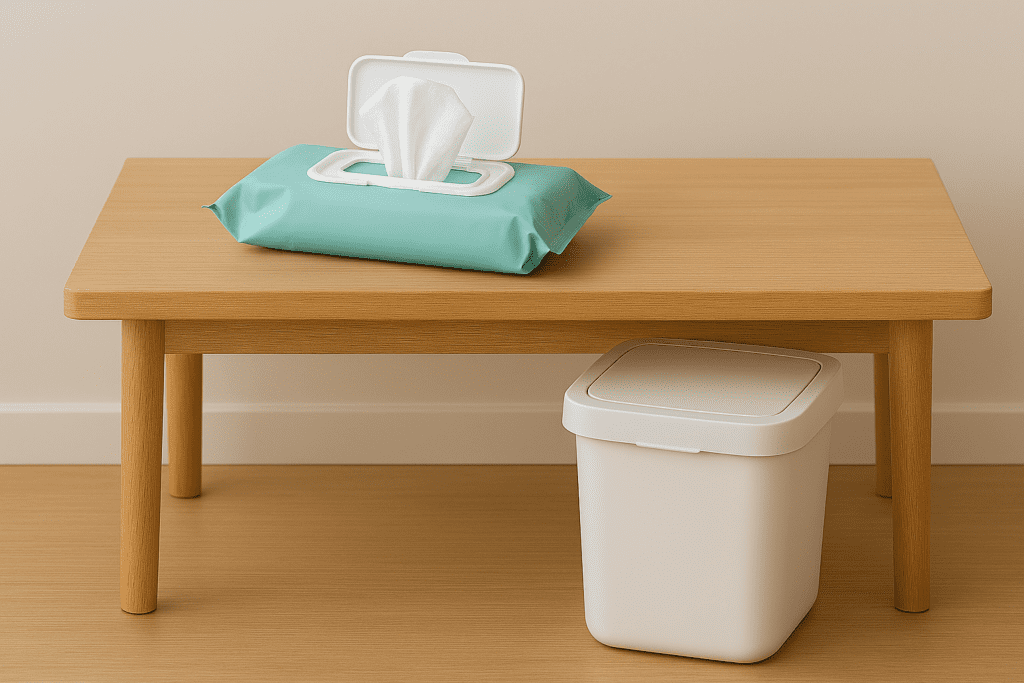
Wipes in Every Room (Clean As You Go)
One of the simplest systems to organise a small space that’s made the biggest difference in our home, is keeping a pack of gentle, sensitive wipes in every single room — and I do mean every room.
They’re used for everything:
wiping hands and faces
quick clean-ups after snacks or crafts
wiping desks, shelves, TV units, and bookcases
tackling dust the moment you notice it
The key here is little and often. Instead of scheduling a full dusting session once or twice a week (which often doesn’t happen), you wipe something down as you pass it. If you’ve got a spare minute, you use it. Over time, dust simply doesn’t build up.
It keeps rooms looking fresh without effort and completely removes the “ugh, I need to clean” feeling. The wipe is already there — so the job gets done.
A Small Bin in Every Room (No More Wandering Rubbish)
Every room in our house also has a small white bin — emphasis on small. Large bins take up precious space, but small ones tuck neatly into corners and don’t dominate the room.
Each bin has:
a simple liner
space for tissues, wrappers, wipes, and bits of everyday rubbish
Because there’s always a bin nearby, rubbish goes straight where it belongs instead of ending up on surfaces, floors, or “temporary” piles.
Once a week, on rubbish day, all the little bins are emptied into the main bin. Five minutes, job done.
This one habit alone prevents clutter from forming — because mess doesn’t get the chance to settle.
Use Vertical Space — Walls Are Gold
When floor space is limited, things must go up.
What works:
Tall shoe racks at both the front and back doors
Bookshelves against walls (almost every available wall in our home)
Some form of shelving next to desks and work areas
Stackable baskets on counters
Bookshelves are one of the best investments for small homes — especially second-hand ones. We’ve collected many over the years from charity shops and people getting rid of furniture. We use them for toys, puzzles, clothes, crockery, arts and crafts supplies, shoes, rock collections, and of course for books.
If it can go up the wall, it should…
Small-space living principles are well established, and using vertical space is consistently recommended as one of the most effective ways to make compact homes work better.
Vertical Space Isn’t Just Walls – Don’t Forget Doors
Over-the-door and over-cupboard organisers are absolute gold in a small home — yet they’re often overlooked.
We use them in several places:
inside a cupboard for extra storage (shoe-style organisers work brilliantly)
on the lounge door to store resistance bands and exercise equipment
in the bathroom for everyday essentials
They use space that would otherwise be wasted and keep items visible but contained, which is ideal for kids and shared spaces.
If something doesn’t fit on a shelf or in a drawer, the back of a door is often the perfect place for it. No floor space lost, no bulky furniture added — just practical storage where you already have room.
Bike Storage: When Big Items Have to Go Outside
Like many UK homes, we don’t have a garage, and our back garden is very small. There’s no space for a shed, and storing bikes indoors simply isn’t practical. Bicycles are one of the biggest space-eaters in small homes. As our children grew and we added more bikes, keeping the bikes indoors simply became impossible. Five bicycles in a small house is not “storage” — it’s an obstacle course.
We tried loose bike covers outside, but the wind blew them off, water got in, and it quickly became more hassle than help.
The real solution came when I saved up and invested in a proper bike storage tent — and honestly, it was definitely worth it.
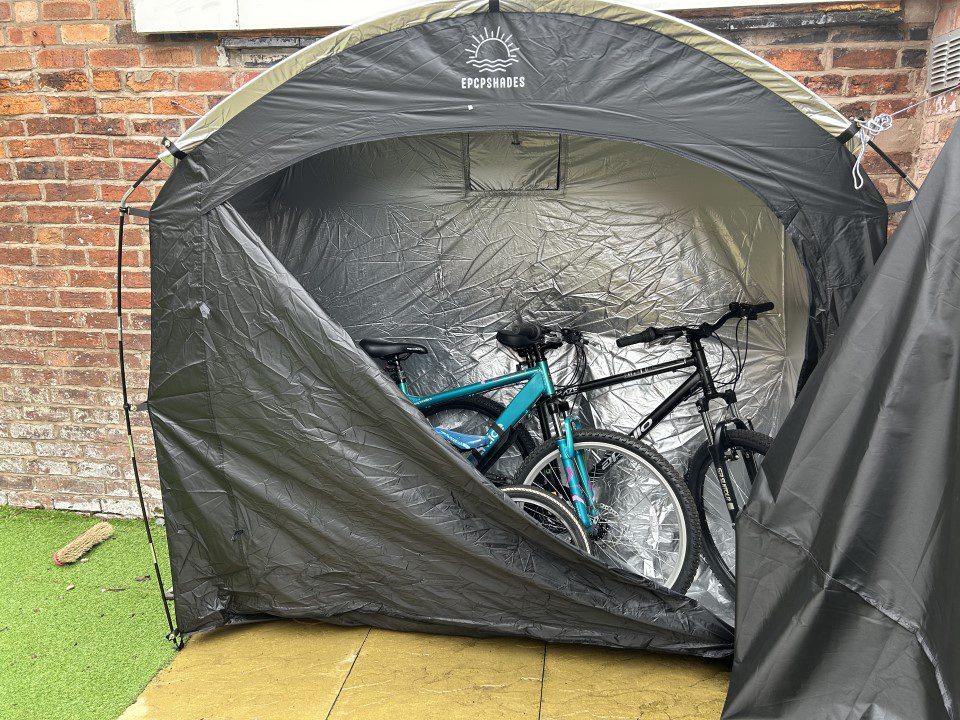
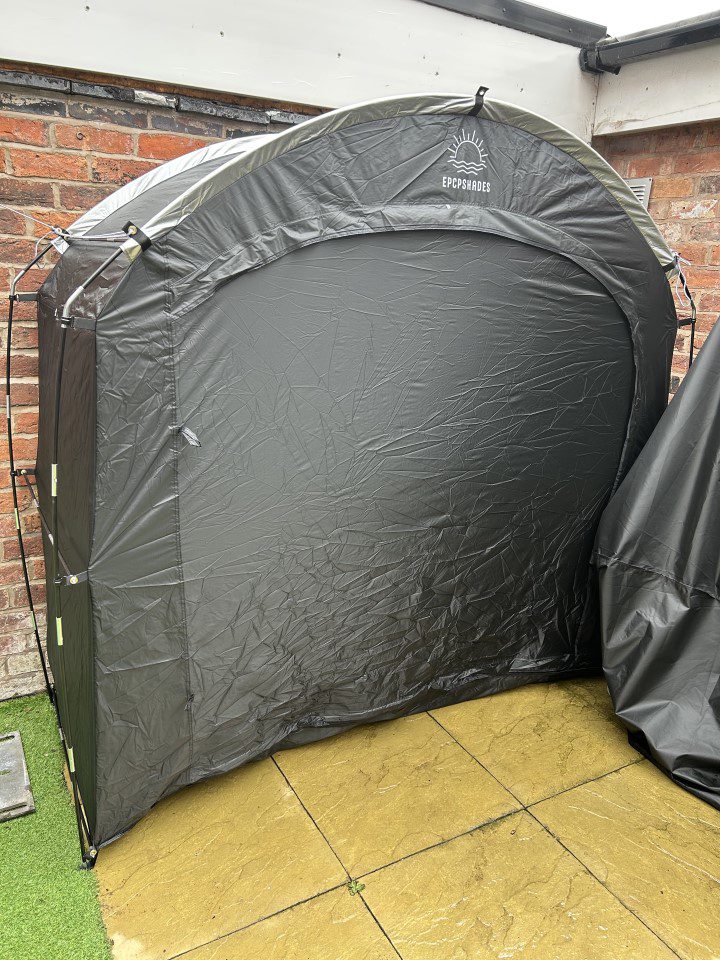
The tent sits neatly against an outside wall, is securely fixed so it doesn’t blow away, and comfortably stores three bikes (two adult and one child-sized in our case). It’s fully waterproof, windproof, and designed to reduce condensation, so the bikes stay protected year-round.
Moving those bikes out of the house instantly freed up floor space, reduced clutter, and made the home feel calmer.
For small homes, sometimes the best organising decision isn’t where to store something inside — it’s recognising when it belongs safely outside.
Pot Racks and Open Storage (Because Cupboards Are Lying to Us)
Small kitchens often pretend they can hold pots. They can’t.
A freestanding pot rack next to the fridge in the kitchen solved this instantly:
Pots and pans are clearly visible
Easy to grab
No cupboard wrestling
No drilling required
Remember: Open storage isn’t messy when it’s intentional.
Reusing and Repurposing Instead of Buying New
Some of the best storage in our house didn’t come from a shop.
Examples:
Honey jars decorated by the kids for stationary, paintbrushes, torches, batteries etc.
Cardboard washing-capsule boxes stapled together and turned sideways to make shelves

Silver hooks hooked on the side of stacking baskets by the washing machine, hold laundry nets so that they can air between washes
Second-hand side tables used as vertical storage
Asking businesses and friends before things go to landfill
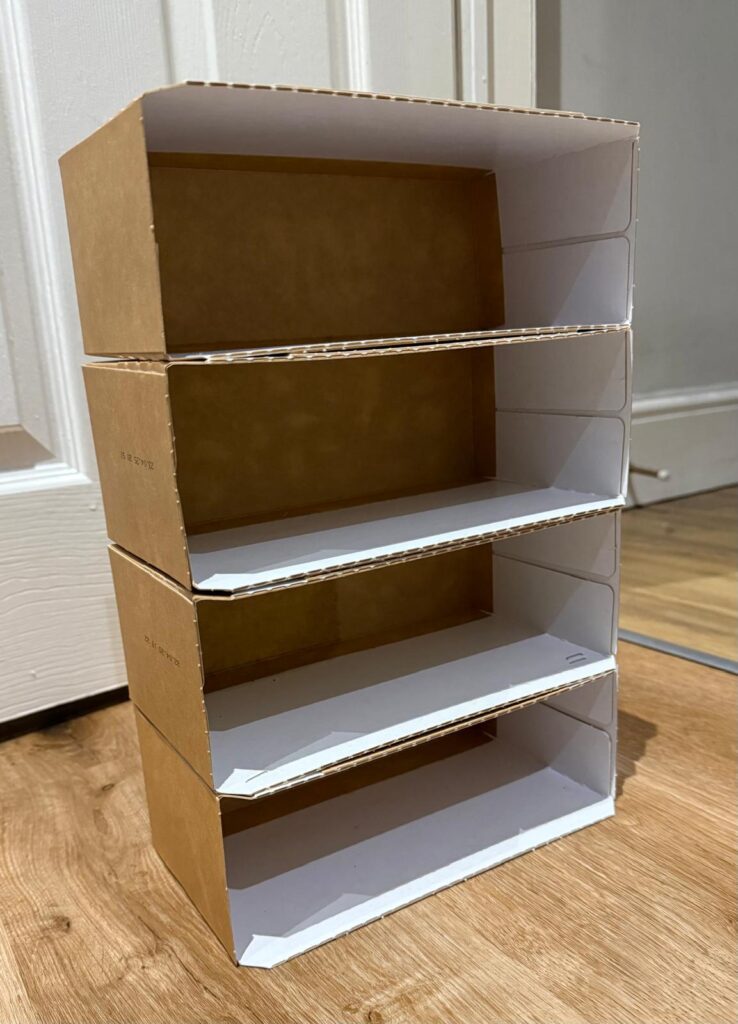
Organisation doesn’t need to be expensive — it needs to be thoughtful.
If you enjoy practical, budget-friendly systems like this, you’ll find more real-life ideas in my Household Hacks section.
A Learning Wall Made From “Rubbish”
One of my favourite systems to organise a small space started as something being thrown away.
An old roll-up sign (rescued from Clive’s workplace) on a metal stand:
Turned around so the white side faces out
Used as a reference learning board for the children
Charts clipped on it with pegs or stuck on with prestik: Numbers 1–100; Animal classification; Geometric shapes; Greek alphabet; ITU phonetic alphabet; Roman numerals
Practical, educational, and space-saving.
This kind of everyday, visual learning fits naturally into our wider home education approach, where learning happens as part of daily life rather than being confined to a desk.
Under-Stairs Laundry Station (No Laundry Room Needed)
Many homes don’t have laundry rooms — so we made one.
Under the stairs:
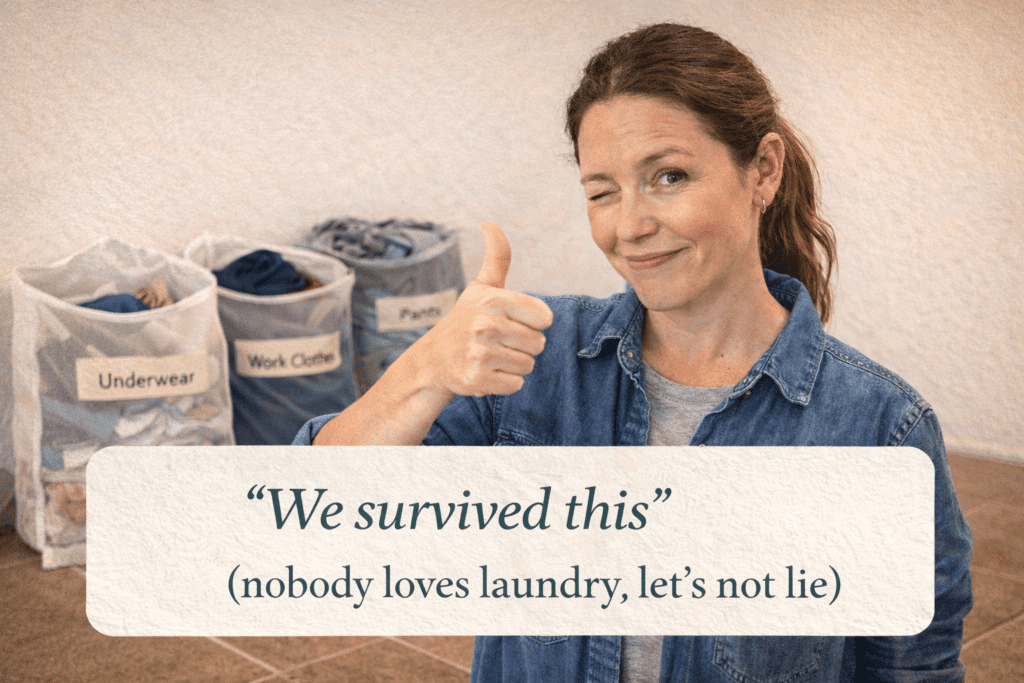
Multiple laundry bags of different sizes and shapes so that they fit next to each other
Clearly labelled with fabric pens:
Short-sleeve and long-sleeve tops
Tracksuit pants
Jackets and jerseys
Underwear
Thermals and pyjamas
Work clothes
Each bag has handles to make it easier to carry to the washing machine.
Once a day:
Everyone sorts their own laundry into the labelled laundry bags
I grab one nearly-full bag on my way downstairs
That bag becomes the day’s wash
No digging. No missing items. No last-minute panic.
And if dirty laundry is not in the bags, then it doesn’t get washed (a lesson in responsibility 😉).
(This system alone saved me hours every week.)
Front Door Organisation: Stop the Daily Scramble
Leaving the house shouldn’t be chaos.
At the front door we have:
Jackets on hooks
Backpacks on another set of hooks and
Two hanging bags:
One for gloves (all types go together)
One for neck warmers /scarves / snoods / buffs
After washing, items go straight back into these bags and then everyone knows exactly where to look for their items.
Hats Without the Pile
Near the same door there is one large, clear zip-up hat bag. Beanies are grouped on one side and sun hats on the other.
Clear storage = no rummaging.
Shoe Zones That Actually Work
Shoes multiply fast, don’t they 🤔 — zones stop the madness.
One shoe rack for the working / college guys
One rack for children’s outdoor shoes and boots
One tier for summer flip flops and sandals
Clear separation = no piles
Everyone knows their zone. End of story.
Stopping Cable Chaos: One Charging Station
Phones, chargers, power-banks and cables everywhere cause daily friction and damage.
Our fix:
One multi-slot charging station
Each phone stands upright in its own designated space
Each slot has its own cable
One plug into the wall
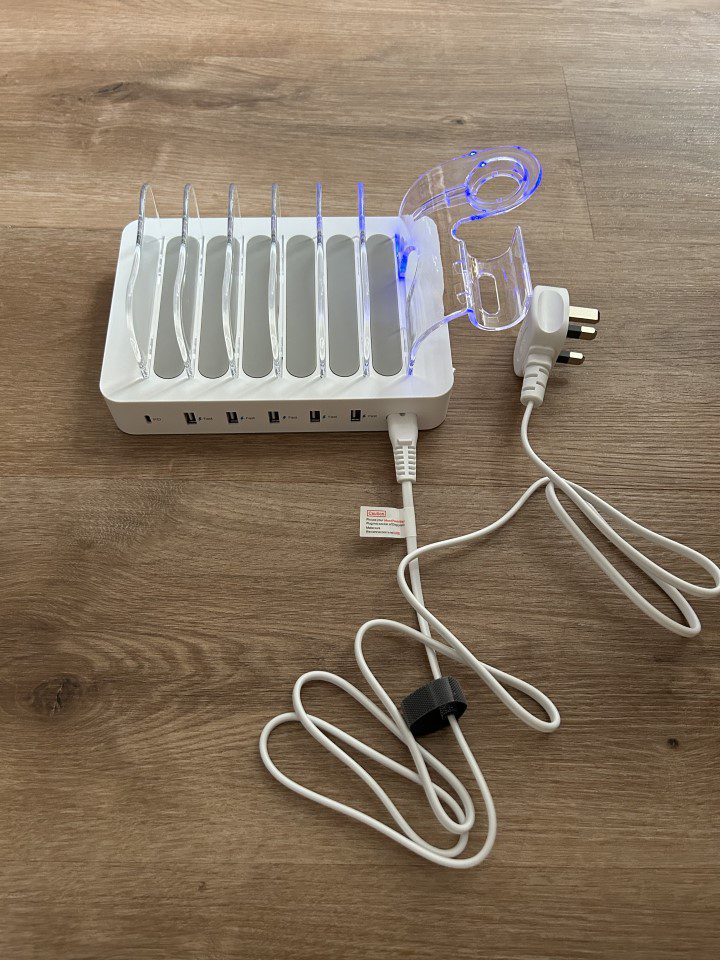
I saved up and waited for a sale to buy this amazing product — and it was definitely worth every penny. Less mess. Less shouting. Less broken items.
A Home That Works for Real Life
This house isn’t perfect.
But it’s calm.
It’s functional.
And it resets quickly.
Organising a small space isn’t about having less life — it’s about making room for it.
And remember:
Systems evolve. Kids grow. Needs change.
Organisation is always a work in progress.
