
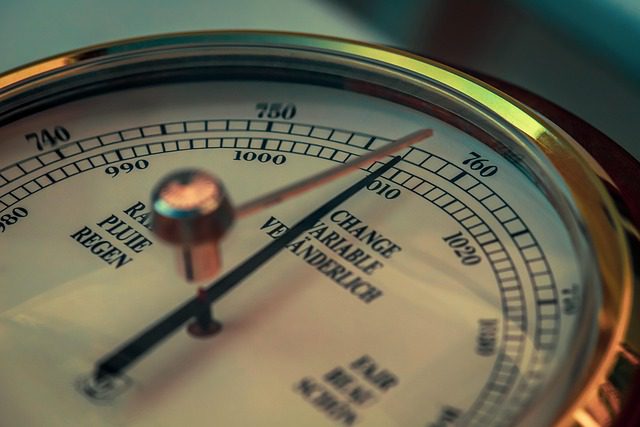
How a Barometer Works (And How to Read One)
How a barometer works isn’t something most of us were ever taught properly. These days, we just glance at a weather app and accept whatever it tells us – even when it’s completely wrong🤔 .
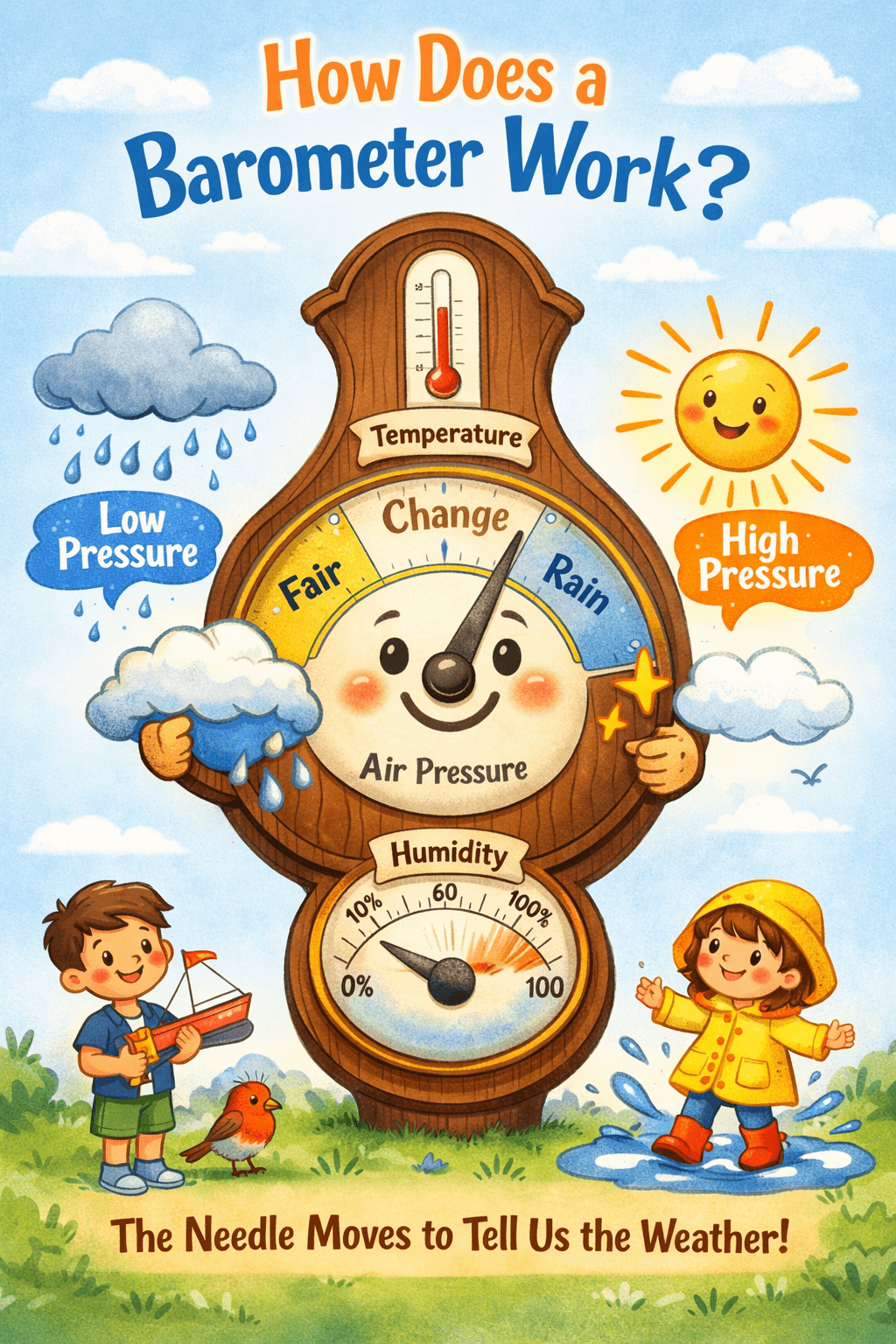
We recently picked up a beautiful old wall barometer from a charity shop. It’s tall, wooden, shaped at the top, with two round dials and those lovely old-fashioned words like Fair, Change, and Rain. We’ve always wanted one.
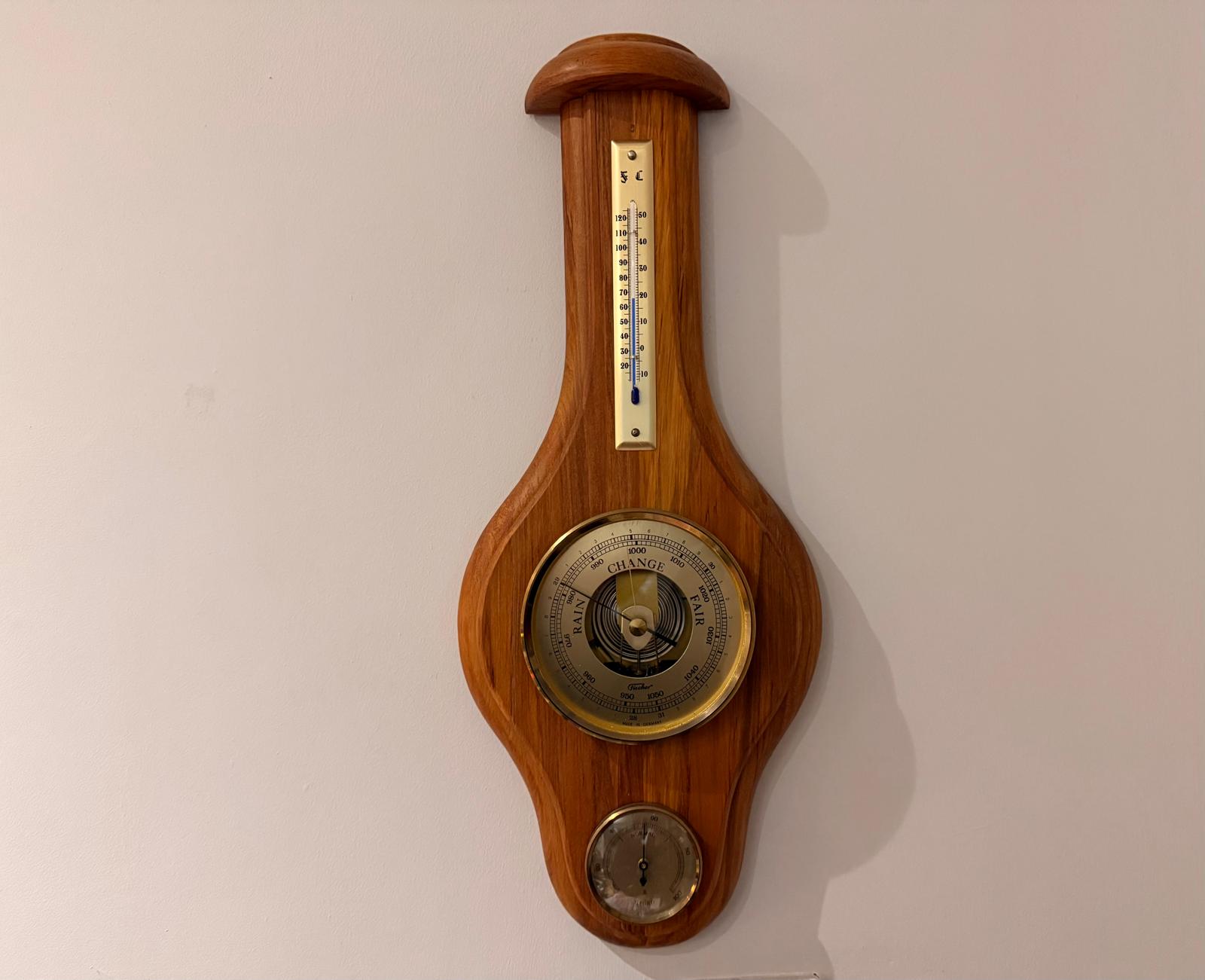
Then we got it home… hung it up… and realised we didn’t actually understand it properly.
Clive understands it far better than I do, but I wanted to really get it – and I figured if I’m confused, plenty of other people must be too. So this post is very much a learning-together post, not a lecture.
If you’ve inherited one, been given one, or rescued one from a charity shop and aren’t quite sure how it works, this one’s for you.
What Kind of Barometer Is This?
The type we have (and the one most people have in their homes) is called an aneroid barometer.
That simply means:
No mercury
No electricity
No batteries
Just clever mechanics
These were common in homes and ships from the late 1800s onwards, and many still work perfectly decades – even a century – later!
The Three Sections Explained (Top to Bottom)
Most traditional wall barometers combine three instruments in one case.
1. Temperature – Top Section
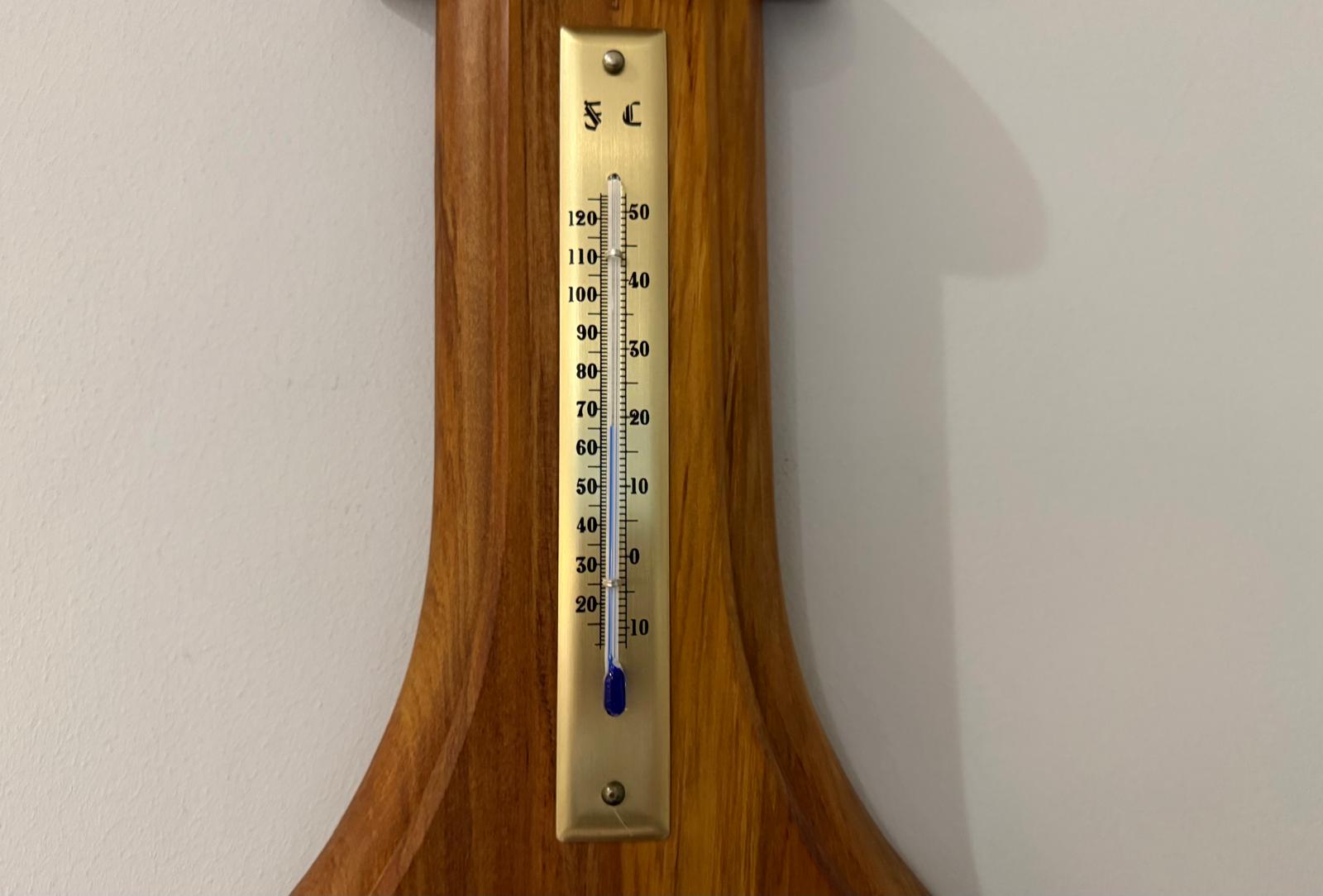
This is the easiest one to understand.
It measures the air temperature
Usually shown in °C, °F, or both
On its own, it doesn’t predict weather, but it helps you make sense of the other readings.
2. Air Pressure – Middle Dial (The Actual Barometer)
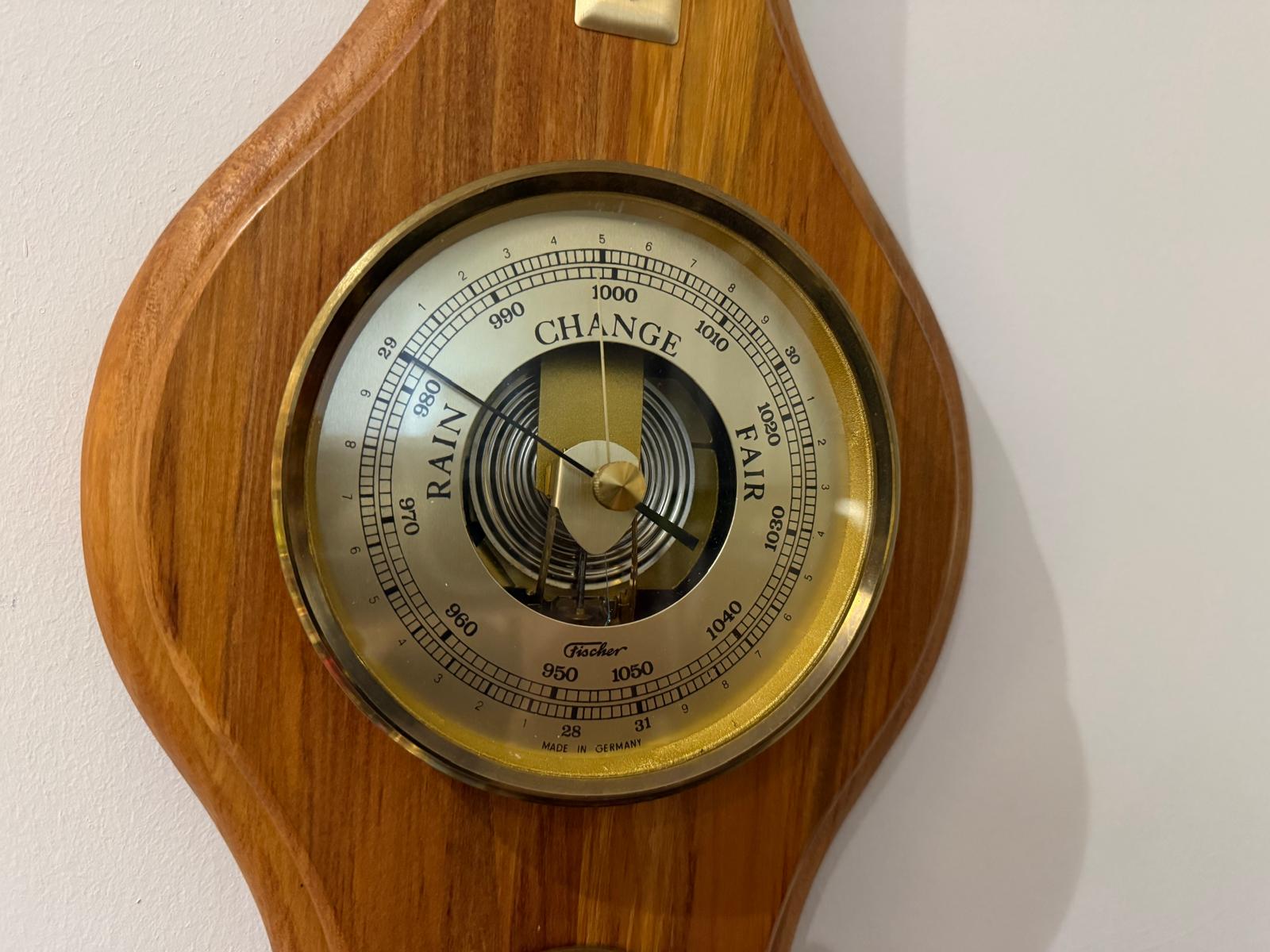
This is the most important part.
Air pressure is the weight of the air pressing down on us. Changes in pressure tell us what the atmosphere is doing.
Traditionally, you’ll see labels like:
Fair – high pressure, settled weather
Change – pressure is unstable
Rain – low pressure, unsettled weather
Here’s the key thing many people don’t realise:
👉 It’s the movement of the needle that matters most, not where it’s pointing.
Most barometers have a small adjustable marker needle (ours is gold as you can see in the photo). You line it up with the main needle (the black one) and then check again later to see which way it’s moved.
3. Humidity – Bottom Dial
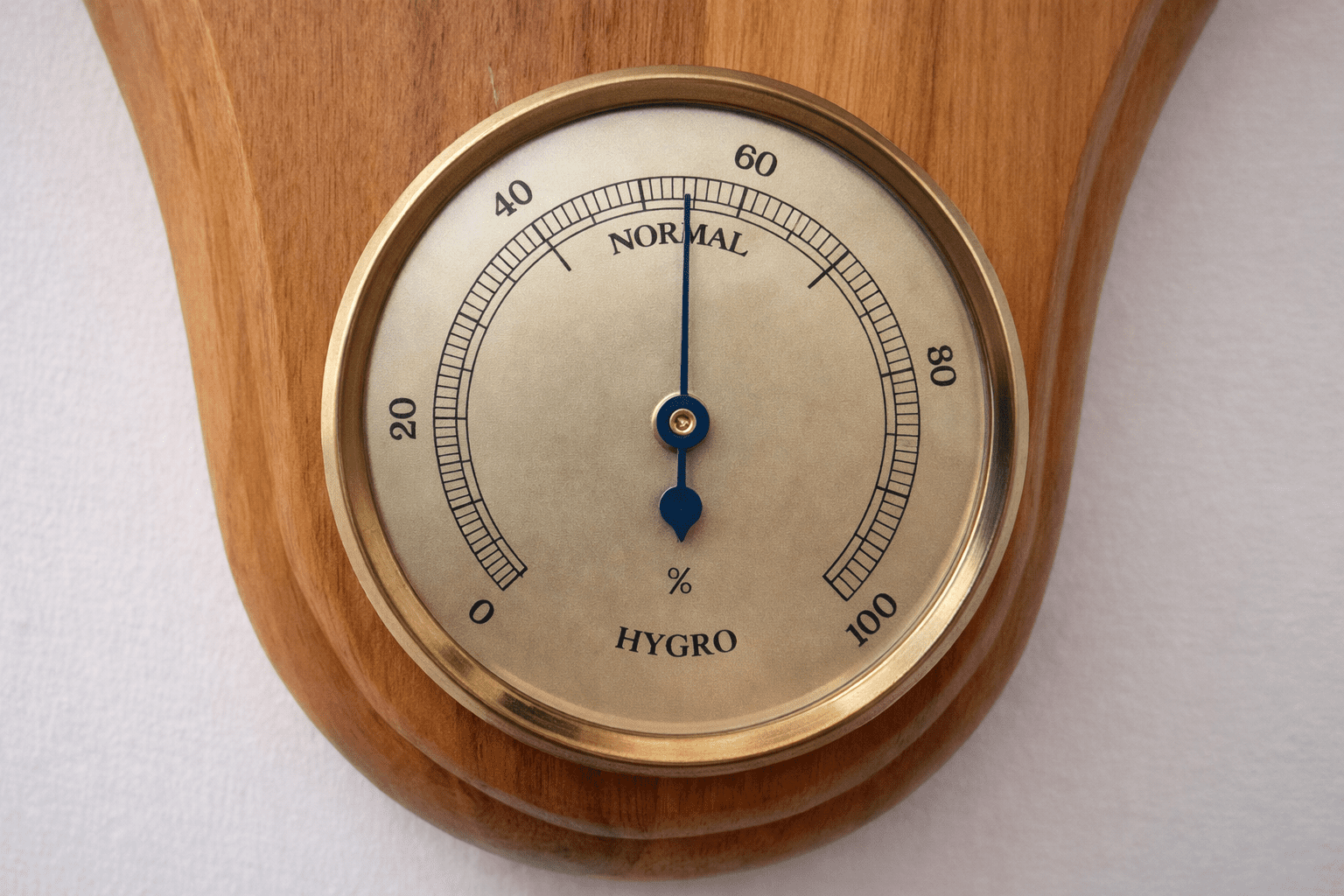
This measures how much moisture is in the air, shown as a percentage.
Low humidity = dry air
High humidity = damp air
High humidity combined with falling air pressure often means rain is on the way. Low humidity with rising pressure usually means clearer weather ahead.
How Does an Aneroid Barometer Actually Work?
Inside the barometer is a tiny sealed metal capsule with almost no air inside it.
When outside air pressure rises, the capsule gets slightly squashed
When pressure falls, it expands
A system of levers and springs magnifies that tiny movement
The needle moves on the dial
No power. No internet. Just physics.
It’s quietly brilliant.
A Barometer Explained for Younger Children
Imagine the air around us is like an invisible blanket sitting on top of the Earth. Sometimes that blanket feels heavy, and sometimes it feels light. The barometer is a tool that can feel how heavy the invisible blanket is.
When the blanket feels heavy, the barometer’s needle moves one way and the weather is usually calm and dry. When the blanket feels lighter, the needle moves the other way and the weather often changes, bringing clouds, wind, or rain. The barometer doesn’t tell us the weather exactly — it just tells us what the invisible blanket is doing.
One quick hands-on trick (this helps it stick)
Stand together and do this:
Put a book gently on their hand → “heavy air”
Lift it off → “light air”
Then say:
“The barometer feels changes like that all day long.”
Kids often need the feeling before the idea clicks.
One-Sentence Memory Helper (for Kids)
“A barometer feels how heavy the air is and shows us when the weather might change.”
That’s short enough to remember, repeat, and explain to someone else — which is how you know it’s stuck.
Simple Drawing / Sketch Idea: “The Invisible Blanket”
Ask the child/children to draw:
A house or person standing outside
A big soft blanket above them labelled “air”
A barometer on the wall with a needle
One picture with the blanket pressing down (happy sun)
One picture with the blanket lifted (clouds or rain)
Prompt to include under the drawing:
“When the air blanket feels heavy, the needle moves one way.
When the air blanket feels light, the needle moves the other way.”
This works brilliantly because:
It turns an invisible idea into something visible
Kids remember pictures far better than explanations
It invites creativity without needing ‘right’ answers
How Far Ahead Does a Barometer Predict the Weather?
This is the question everyone (including myself) asks.
A traditional barometer does not forecast a set number of hours ahead. It doesn’t work like a weather app.
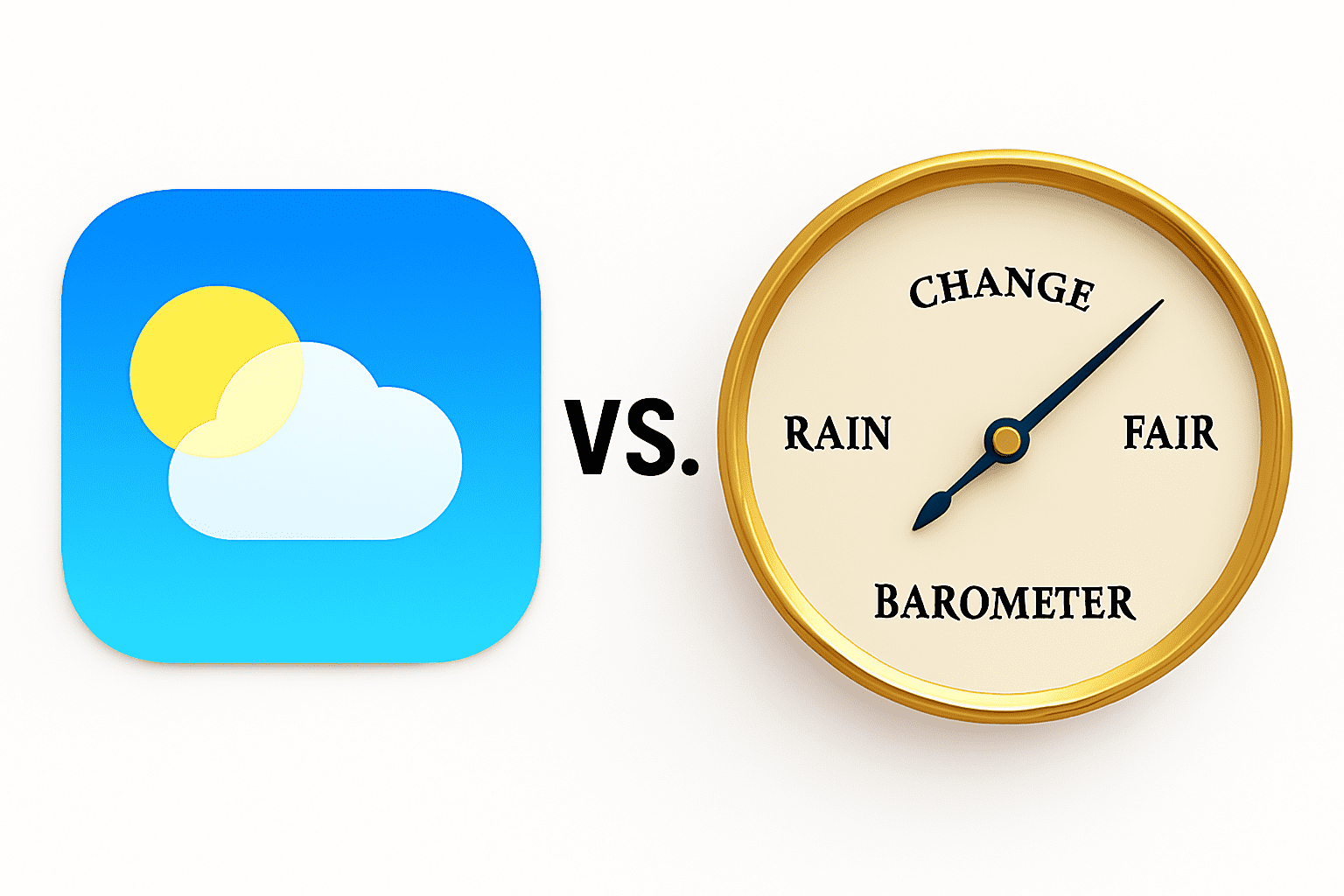
Instead, it shows what the air pressure is doing right now, which gives you a rough idea of what’s coming next.
In typical UK conditions:
Slow, steady fall in pressure
→ Weather change likely in 12–24 hoursRapid drop in pressure
→ Change can arrive in 3–6 hoursSlow rise in pressure
→ Improving weather over the next dayFast rise in pressure
→ Clearing weather within a few hours
So when the needle moves toward Change, it’s really saying:
“Something is shifting – keep an eye on things.”
Not:
“Rain at a specific time.”
Why “Change” Doesn’t Always Mean Rain
Another common misunderstanding.
“Change” simply means the atmosphere is unstable. That change could be:
Dry to wet
Calm to windy
Cold to milder
Clear to cloudy
Rain is common – but not guaranteed.
How We Use Ours Day to Day
The traditional way to use a barometer is simple:
Hang it on an inside wall, away from heat sources
Let it settle for a day
Set the marker needle to the current reading
Check again after 3–6 hours
Watch the direction and speed of movement
Over time, you start spotting patterns without even thinking about it.
Why This Is Brilliant for Home Education
This is where the barometer really shines.
It’s:
Hands-on
Visual
Slow and observational
Perfect for real-life science
Children (and adults!) learn:
Cause and effect
Observation over time
Pattern recognition
Basic physics and geography
You can turn it into a simple activity:
Record readings morning and evening

Compare them to the actual weather
Keep a weather journal
Make predictions and check them later
Why We Love Having One
There’s something grounding about using tools people relied on long before screens and notifications.
A barometer:
Encourages curiosity
Rewards patience
Works quietly in the background
Looks beautiful on the wall
And yes… it’s very satisfying to say,
“The barometer dropped last night – I thought this rain was coming.”
Final Thoughts
If you’ve got a traditional barometer hanging on your wall and you’ve never quite understood it, you’re not alone.
Learning how a barometer works turns it from a decorative object into a genuinely useful, fascinating learning tool – and one that never needs charging.
Sometimes the old ways really do get it right.


